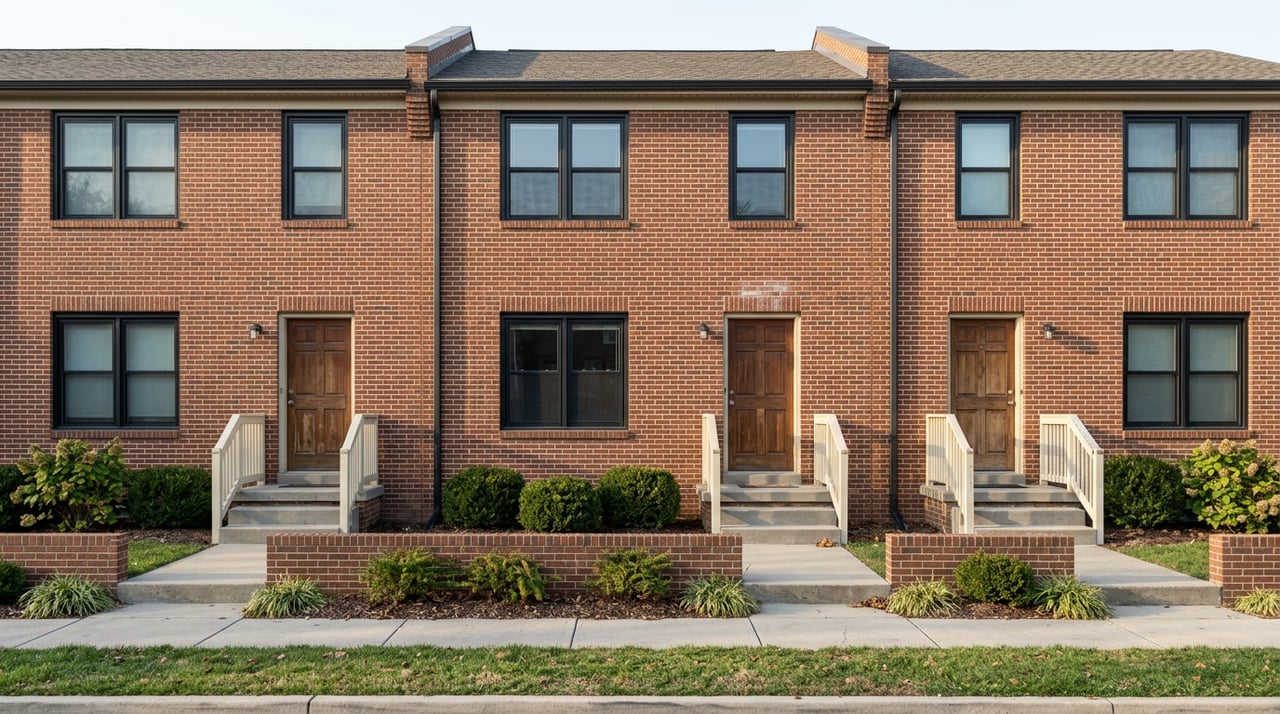
Two townhomes hit the Reston market the same week. Same square footage, same asking price, same "HOA: Reston Association" line sitting in the listing data. One buyer ends up carrying about $75 a month in association dues. The other lands closer to $230, and that's before any condo fee stacks on top if a third layer applies. Neither listing lied. Neither one told the whole story either.
That gap is the thing worth understanding before you write an offer in Reston. The number printed on a listing sheet is almost never the number you'll actually pay every month, and the difference between the two only shows up in documents you have to request by name, from two separate organizations, weeks before closing.
Why One Address Can Carry Two or Three Bills
Reston Association is a master association layered over more than 160 separate sub-associations, a mix of cluster HOAs and condo associations, each with its own budget, its own reserve fund, and its own fee schedule. Most properties inside Reston owe the RA assessment. Many of those same properties also owe a second bill to a cluster HOA or condo association, and some condo owners inside larger buildings owe a third layer if an additional master association sits above the building itself.
This is a governance structure, not a defect. Reston Association maintains 1,350 acres of open space, four man-made lakes covering roughly 125 acres, 15 pools, and 55 miles of pathways, along with 107 bridges and 26 underpasses that need regular upkeep. Its Design Review Board also reviews exterior changes, from fences to replacement windows, to keep the community's design standards consistent from block to block. None of that work is optional or hidden. What's easy to miss is that RA dues fund all of it, while a completely separate budget, funded by a completely separate assessment, covers whatever sits inside your specific cluster or building.
What Reston Association's Own Numbers Look Like in 2026
Start with the layer that applies almost everywhere. Reston Association's board adopted a $24 million budget for 2026 at its meeting on November 13, 2025, and set the annual assessment at $890, a 5% increase over the prior year. Invoices go out in mid-December and payment is due January 1, with late fees applying after March 1. Homeowners who qualify for the Fairfax County Tax Relief Program, based on age, disability, or income criteria, pay a reduced $445 assessment instead, provided they submit their county qualification notice by July 31.
There's also a one-time cost that shows up only at settlement rather than every year. Reston's governing deed sets a transfer fee, $374 for 2026, paid by the buyer when a lot changes hands. It's a small number relative to a purchase price, but it's one more line a buyer should expect on a closing statement rather than discover there.
That $890 figure funds real, visible projects. The 2026 budget includes new water filling stations at Lake Thoreau and Lake Audubon, a trail relocation at Upper Lakes Drive, and infrastructure repairs at Uplands Pool. It's a reasonable number to budget around, and it's the same number regardless of which street you're on. The variable that actually moves the needle on monthly cost sits one layer down.
What the Second Layer Actually Costs
Soapstone Cluster, one of Reston's many sub-associations, carries an annual assessment of $1,880, which works out to about $156.67 a month. Add that to RA's $890 a year, or roughly $74.17 a month, and a buyer in that cluster is carrying about $230.83 a month in combined association dues before any condo or master fee enters the picture.
That's one data point, not a rule. As of 2025, townhome cluster fees across Reston commonly ranged from $100 to more than $400 a month, while high-rise condo fees could exceed $800 to $1,000 a month depending on the building's age, amenities, and reserve funding. Two homes priced identically can sit at opposite ends of that range, and the listing sheet has no reliable way to show you which one you're looking at. The only way to know is to ask which cluster, condo, or master association attaches to that specific parcel, then request that association's own fee schedule directly.
The Document That Actually Answers the Question
Virginia law requires a seller to obtain a resale disclosure certificate from Reston Association before closing, and RA has 14 days from the date payment is received to deliver it. If the home also sits inside a cluster or condo association, a second, separate disclosure packet has to come from that association too. Only the owner or an authorized agent can order these documents, which means the request has to happen early in a transaction, not as an afterthought during the inspection period.
These packets aren't just a formality. They typically include current assessment amounts, budget details, reserve information, and any open design or maintenance violations flagged during an association inspection of the property. For a cluster or condo, they also show whether a special assessment has been discussed or is already planned. A buyer who waits until the week before closing to request both packets is the buyer most likely to be surprised by something in them.
What Virginia Law Requires the Board to Show You
Virginia's Property Owners' Association Act and Condominium Act both require associations to commission a reserve study at least once every five years and review it annually, adjusting the budget as needed to keep reserves adequate for major repairs. When that study shows a need to fund reserves, the annual budget has to disclose the estimated replacement cost and remaining life of major components, the current cash on hand against the expected contribution for the year, and how the recommended reserve level compares to what's actually been saved.
One change is worth knowing about specifically because it shifted leverage away from individual owners. Before July 1, 2024, owners had a statutory right to rescind or reduce an "additional assessment" within 60 days of notice. A 2024 law, HB 1209, removed that right for any additional assessment levied primarily to maintain, repair, or replace capital components. In practical terms, a board can now push through a necessary capital assessment without the assessment being subject to owner veto. For a buyer, that means "no special assessment currently planned" is a snapshot of today, not a promise, especially in a building where the last reserve study is old or funding sits well below what that study recommended.
The 2027 Financing Wrinkle Worth Checking Now
There's a lending change coming that hasn't fully landed in most buyers' awareness yet. Starting with loan applications dated January 4, 2027, Fannie Mae and Freddie Mac will require associations to direct at least 15% of annual assessment income into reserves, up from a 10% floor that has held for years. Communities that fall short risk losing their "warrantable" status, the designation that allows buyers to get a standard conventional mortgage in that building. Losing it doesn't just affect the unit being sold. It drags down financing options, and eventually values, for every owner in the association. There's an exception: associations that completed a reserve study within the past three years and are funding at that study's highest recommended level are exempt from the flat 15% rule.
If you're financing a purchase in a Reston condo or cluster and expecting to close near the start of 2027, this is worth raising directly with the seller's association now, while there's still time to confirm the community's standing before it affects your loan.
Four Questions to Ask Before You Write the Offer
- Does this specific address pay Reston Association only, or RA plus a cluster or condo fee, or all three layers? Get this confirmed in writing rather than relying on the listing sheet.
- When was the association's last reserve study completed, and is current funding at or above that study's recommended level?
- Have board meeting minutes from the last 12 months mentioned a special assessment, whether voted on or still under discussion?
- What does the master or condo insurance policy actually cover, and will an HO-6 policy be needed to close any gap in personal property or interior coverage?
None of these questions show up as a field on a listing. All four are answerable once you have both disclosure packets in hand, which is exactly why requesting them early matters more in Reston than in a community with a single layer of governance.
FAQ
Does every Reston property pay the Reston Association assessment? Most do, since RA membership runs with the deed for the majority of parcels inside its boundaries, but exemptions exist. Confirm status for the specific address rather than assuming it from the neighborhood.
Can a buyer request the resale disclosure packet before making an offer? Only the owner or an authorized agent can order it, so this is something to raise with the listing side early in a transaction rather than something a buyer can request independently ahead of an accepted offer.
Does a healthy Reston Association budget mean the cluster or condo underneath it is healthy too? No. RA's reserves and a sub-association's reserves are entirely separate accounts, funded and reported independently of each other.
Reston's layered fee structure isn't a reason to avoid the neighborhood. Its trails, lakes, and pools are part of why people want to live there in the first place. It is a reason to read two documents instead of one before you get attached to a number on a listing sheet.
If you're comparing homes across Reston's clusters and condo buildings and want help pulling the right disclosure packets before you write an offer, reach out to Josh Harris. Get your instant home valuation and let's talk through what a specific address actually costs to carry, layer by layer.