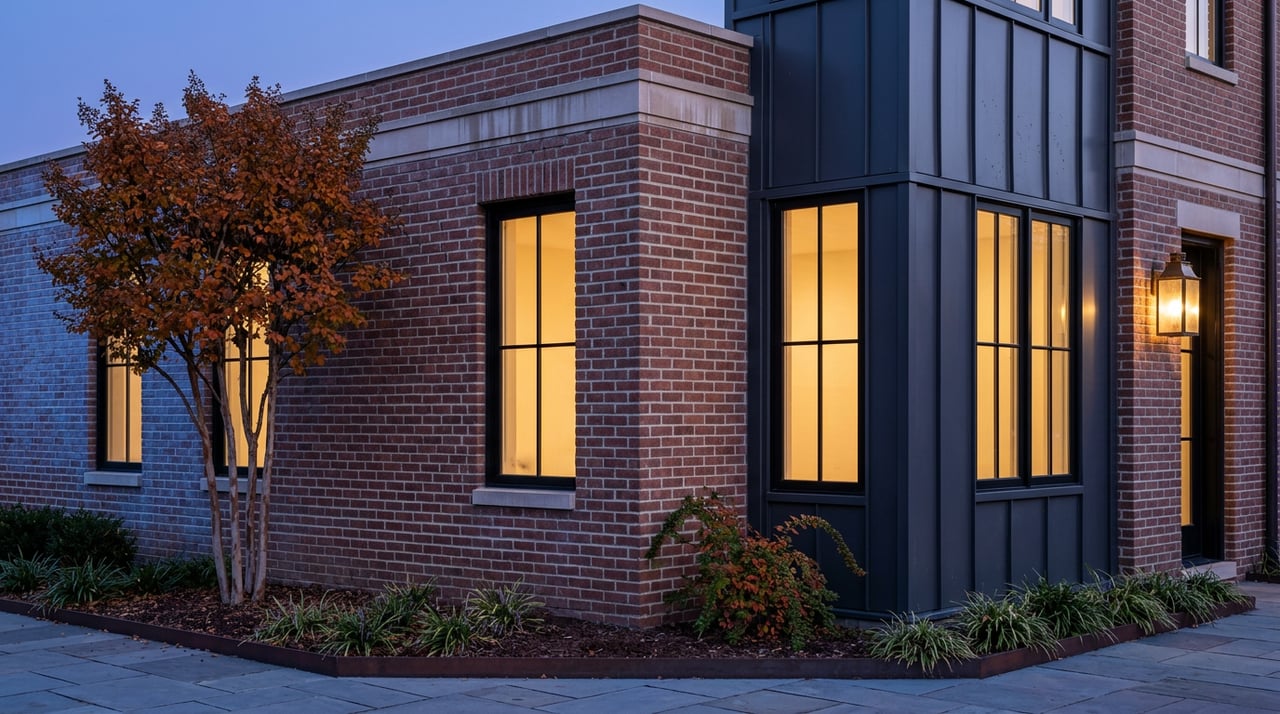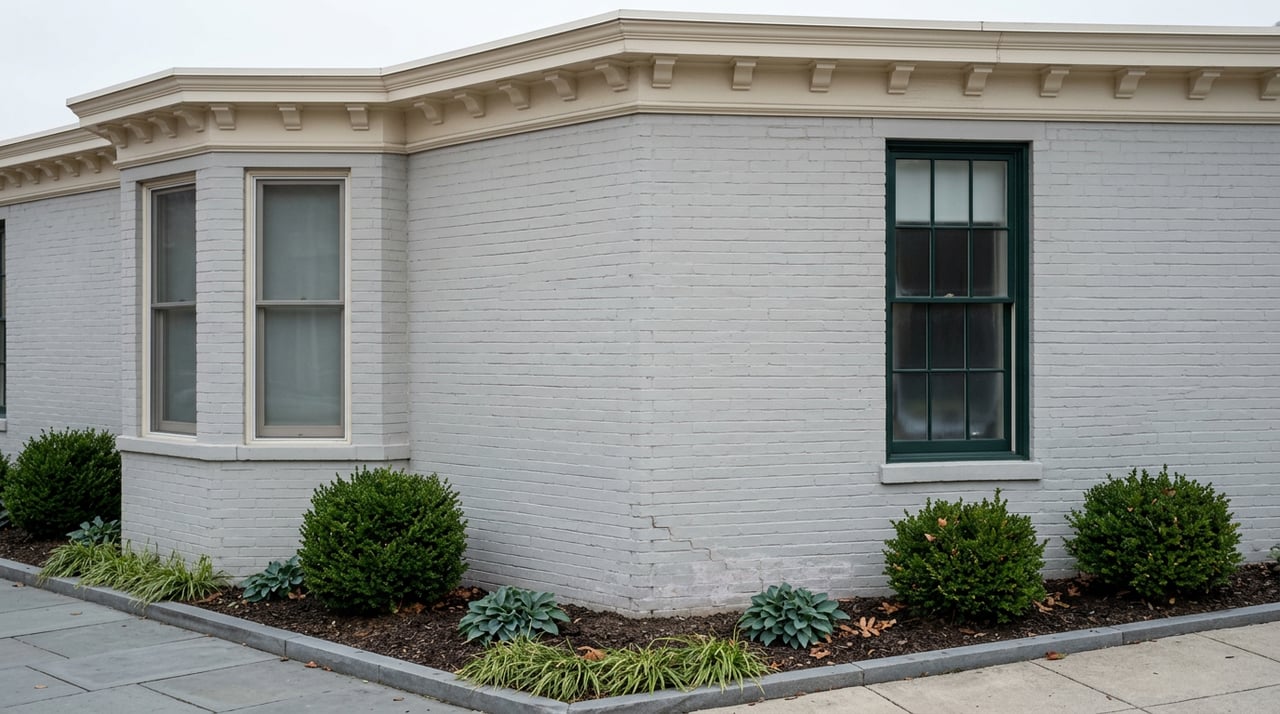
If you're buying, selling, or renovating inside one of Charlottesville's historic districts, you've probably been told the same reassuring line: the Board of Architectural Review protects what makes these blocks worth living on. That's true, as far as it goes. But ask what happens when the board says no and gets overruled anyway, and the picture gets more complicated. In 2026, Charlottesville answered that question in public, on the record, over a seven-story building a few blocks from the Downtown Mall. Anyone with money riding on a historic-district property should know exactly what that answer was.
What the Board Actually Controls
Charlottesville has eight Architectural Design Control districts: Downtown, North Downtown, Ridge Street, West Main Street, The Corner, Wertland Street, Oakhurst-Gildersleeve, and Rugby Road-University Circle-Venable. Layered on top are Historic Conservation Districts, including Martha Jefferson, the Rugby Road neighborhood, and Woolen Mills Village, plus 76 Individually Protected Properties scattered across the city, protected one by one regardless of which district they sit in.
Any exterior change inside these boundaries, new construction, additions, demolitions, even significant site work, needs a Certificate of Appropriateness from the Board of Architectural Review before a permit gets pulled. The board does not touch interiors, and it has no reach outside its mapped districts. Inside them, though, its sign-off is not optional. Start work without it and the city can issue a stop-work order mid-project, require a full reversal, or levy fines. None of that is theoretical. It's the standard enforcement path the board already uses.
What the board's approval does not do is guarantee an outcome. That distinction sat mostly hidden until a single project in Fifeville forced it into the open.
The Case That Actually Tested the System
In the summer of 2025, an ownership entity called LCD Acquisitions filed plans for a seven-story apartment building called The Mark, aimed at University of Virginia students, on parcels along Seventh Street SW and Delevan Street in Fifeville. Two of those parcels held 19th-century workers' cottages at 204 and 208 Seventh Street, built by a man named James Hawkins and designated decades earlier as Individually Protected Properties. Because the project's design incorporated those two structures, it needed a Certificate of Appropriateness from the Board of Architectural Review before it could move forward.
On December 16, 2025, the board voted 6 to 1 to deny that certificate. Members and much of the public in the room argued a seven-story building had no business enclosing two small 19th-century cottages in a neighborhood of modest single-family homes.
That denial should have ended the design in its current form. It didn't. LCD Acquisitions appealed to City Council, and on May 4, 2026, Council voted 3 to 2 to overturn the board's decision and grant the certificate anyway. Mayor Juandiego Wade, Vice Mayor Natalie Oschrin, and Councilor Lloyd Snook made up the majority, citing the city's housing shortage as the deciding factor. Snook was direct about it during the meeting, arguing the two cottages were in poor condition and that no one had offered any alternative plan that would actually preserve them.
Then came the part that matters even more for anyone reading the board's authority as a hard stop. As pressure built from the Fifeville Neighborhood Association and other groups through the summer to revisit the vote, Charlottesville's City Attorney told the public in July 2026 that no such revisit was possible. The certificate of appropriateness process, he explained, runs under a specific section of the city's Development Code, and once Council acts on an appeal, its role in that process is finished. There is no procedure written into the code for Council to reopen, rescind, or re-vote its own decision.
That's the mechanism worth sitting with. A property inside a historic district isn't shielded by a single gate that either opens or stays shut. It's shielded by a board with real teeth, an appeal path to Council that can override the board, and a closing door behind that appeal with no way back through it.
What This Actually Means If You're Buying Nearby
If you're evaluating a home near a protected property, or one that includes an Individually Protected Property, the zoning underneath it matters more than the historic designation sitting on top of it. The Fifeville parcels were zoned Residential Mixed Use 5 under the development code Council adopted in December 2023, a designation that allows buildings up to seven stories with unlimited residential density, by right, with no Council vote required for height or density on their own. The Board of Architectural Review only entered the picture because two of the five parcels happened to carry individual historic protection. Strip those two lots out of the assembly and the board would have had no jurisdiction over the project's height at all.
For a buyer, that means the honest question isn't "is this in a historic district." It's "what does the zoning under this district actually allow, and does the historic protection here cover the specific thing I'm worried about." A charming cottage with Individually Protected Property status sounds like a permanent shield against whatever gets built next to it. What Fifeville showed is that the shield covers the cottage's own walls, not the air rights above the block.
| Designation | Where It Applies in Charlottesville | What Triggers Board Review |
|---|---|---|
| Architectural Design Control District | Downtown, North Downtown, Ridge Street, West Main Street, The Corner, Wertland Street, Oakhurst-Gildersleeve, Rugby Road-University Circle-Venable | Exterior alterations, additions, new construction, demolition |
| Historic Conservation District | Martha Jefferson, Rugby Road neighborhood, Woolen Mills Village | Same categories of review, generally under more flexible design guidelines |
| Individually Protected Property | 76 properties citywide, independent of district boundaries | Any exterior change or demolition to that specific structure |
If You're Planning Renovation Work Yourself
The board's authority cuts the other direction too, and it catches homeowners just as often as developers. Plenty of people who buy into one of these districts don't realize the Architectural Review Board has jurisdiction until a contractor is already hired and materials are already ordered. At that point, a design that looked simple on paper needs a pre-application conversation with city staff, a formal application through the city's Permit Portal, and a hearing before the board can happen on its own monthly schedule.
Skipping that sequence is the expensive mistake. A homeowner who starts exterior work without a certificate can face the same stop-work order and forced reversal that any developer would. The fix isn't complicated: a district boundary check and a pre-application meeting before any contract gets signed, not after. That single meeting, done early, tends to save weeks later and heads off a redesign nobody wants to pay for twice.
Four Questions Worth Asking Before You Write an Offer
- Is the property inside one of the eight ADC districts, a Historic Conservation District, or individually protected, and does that status cover the exterior element you actually care about?
- What is the underlying zoning designation, separate from the historic overlay, and what does it allow by right?
- Has the Board of Architectural Review denied or approved a Certificate of Appropriateness for this address or an adjacent parcel in the past two years?
- If a denial gets appealed to City Council, is there any pending hearing already scheduled that could change what gets built next door?
FAQ
Does owning a home in an ADC district mean I need approval to repaint? Minor changes like paint color and signage are often reviewed administratively by city staff rather than requiring a full board hearing, though it depends on the specific district guidelines.
Can the city really force me to undo work I already finished? Yes. Work completed inside a design control district without a Certificate of Appropriateness is subject to stop-work orders, mandatory reversal, and civil penalties.
Does a National Register listing carry the same restrictions as a local ADC designation? No. State or National Register recognition is largely honorary and does not by itself impose the same local review requirements that a city-designated ADC district or Individually Protected Property status does.
What's the practical difference between an ADC district and a Historic Conservation District? Both require Board of Architectural Review sign-off for exterior work, but Historic Conservation Districts were created as a somewhat more flexible alternative, intended for neighborhoods with a more modest historic housing stock than the older ADC districts.
Historic-district status in Charlottesville is real protection, and it's also a narrower guarantee than the phrase suggests. If you're weighing a purchase, a sale, or a renovation inside one of these districts, the details above are exactly the kind of thing worth running past someone who tracks this market closely before you write anything down.
Josh Harris works these Charlottesville neighborhoods regularly and can help you check a specific address against its district status, zoning, and board history before you make a decision. Get your instant home valuation to start the conversation.