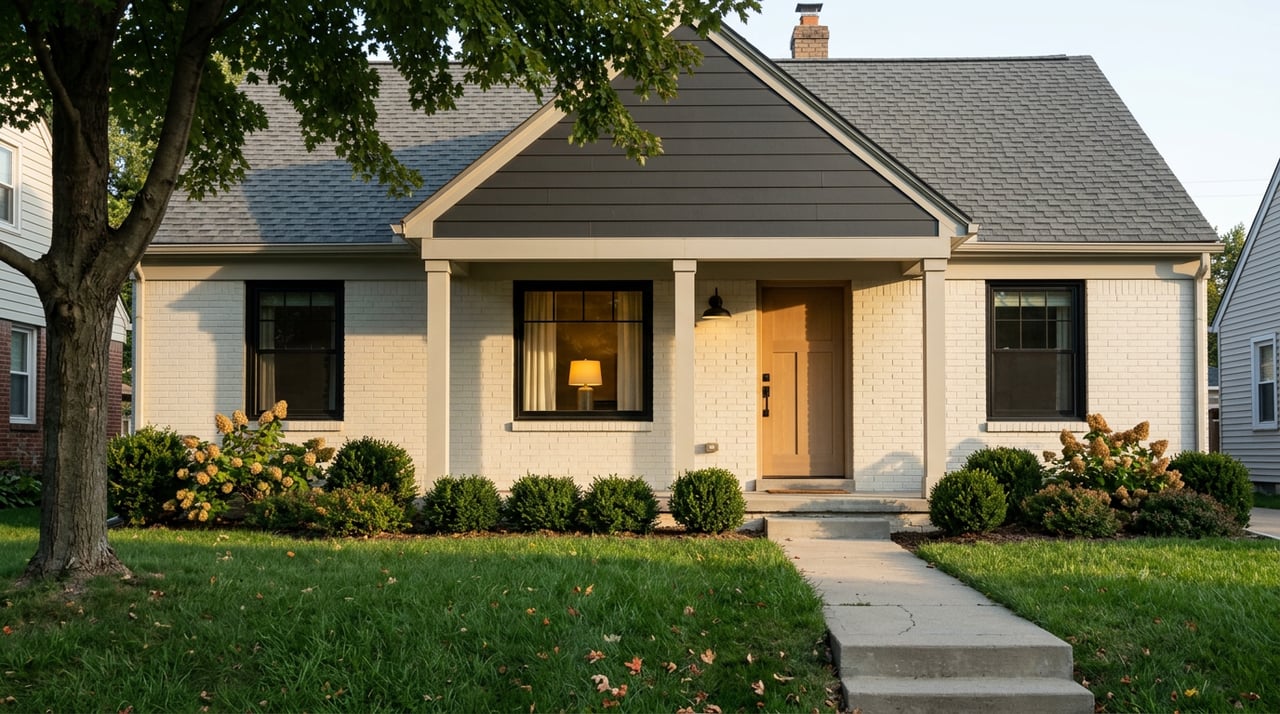
Buying your first home in Charlottesville can feel exciting and a little overwhelming. Prices are higher near UVA and Downtown, and listings can move quickly. You want clear numbers, local options for help with your down payment, and a step-by-step plan that keeps you on track. This guide gives you current market context, realistic budgeting tips, neighborhoods to consider, and a simple process from pre-approval to closing. Let’s dive in.
Charlottesville market at a glance
The Charlottesville Area Association of REALTORS (CAAR) reported a regionwide median sales price of $464,995 in Q4 2025. The City of Charlottesville came in higher at $546,140, and Albemarle County at $558,750. Inventory was also higher than the prior year, with roughly three months of supply across the CAAR footprint, which means more choice for you even though well-priced homes still draw interest. You should also plan for faster decision-making since city listings moved quickly, with a city median days on market near 22 days in Q4 2025. See the CAAR Q4 2025 market report.
What this means for you:
- Expect premiums for homes close to UVA and Downtown.
- Use city and county medians to set a realistic budget.
- Be ready to move quickly on a well-priced, move-in-ready listing.
Set your budget with real numbers
Start by mapping out upfront cash and monthly affordability. In Virginia, typical buyer closing costs run about 2 to 4 percent of the purchase price. It is smart to plan for 3 to 5 percent total upfront when you include closing costs, inspections, and prepaids. For example, on a $450,000 purchase, that might be roughly $13,000 to $22,000 depending on your down payment and any assistance you use. For a quick closing-cost overview, review this Virginia buyer cost reference on fees and estimates from a statewide summary source.
- Closing-cost reference: Virginia buyer closing-cost overview
- City and county property tax pages: City of Charlottesville FAQs and Albemarle County tax rates
Tip: When you estimate your monthly payment, include principal and interest, homeowners insurance, and property taxes. Rates and terms change, so ask your lender for a current estimate based on your credit, the property type, and location. If you need help closing the gap, look at state and local assistance options below.
Loan options that work in Virginia
Several loan types fit first-time buyers in Charlottesville. The right choice depends on your income, credit, location, and eligibility.
- Virginia Housing programs. Virginia Housing offers first mortgages that pair with down-payment and closing-cost assistance, plus Mortgage Credit Certificates. Many first-time buyers use these programs to reduce upfront costs, but they come with income and price limits, required homebuyer education, and approved-lender rules. Start here to see options and find approved lenders at Virginia Housing homebuyer programs.
- FHA, VA, USDA, and conventional. You can use standard programs available through local lenders. FHA allows lower down payments. VA offers zero down for eligible veterans and service members. USDA can work in eligible rural areas. Some conventional products allow smaller down payments as well.
If you plan to use a VA loan, note that termite and wood-destroying insect documentation can affect your timeline in this region. Check current guidance so you order the correct inspection at the right time. See a concise overview at VA loan local WDI requirements.
Local assistance you can layer
You may be able to combine state, local, and nonprofit programs to lower your upfront cash. These are well known in the Charlottesville area:
- Piedmont Community Land Trust (PCLT). PCLT creates permanently affordable homeownership opportunities. Recent examples include new-construction resales around the low-$200,000s, such as a Nassau Street home listed at about $215,000 for income-qualified buyers. Explore examples at PCLT recently sold homes. Income and resale rules apply, and you complete a defined program path.
- Piedmont Housing Alliance (PHA). PHA administers local down-payment loans and SPARC interest-rate subsidies for buyers under area median income limits. Many buyers layer a Virginia Housing first mortgage with a PHA assistance product. For data and program mechanics, review the PHA program analysis.
Pro tip: Assistance funds can be limited and time sensitive. Start your education course early, connect with an approved lender, and get your documents ready so you can lock in support when you find the right home.
Where first-time buyers start looking
Every neighborhood is different, and public portals use different methods. Treat these as signals, not guarantees, and ask for a custom comparative market analysis before you write an offer.
- Fifeville. Close-in location, older homes, and a mix of single-family, condos, and townhomes. Recent signals show a wide range, with some median sale snapshots near the low-$300,000s and Zillow estimates closer to the high-$300,000s as of late 2025 to early 2026. Good for buyers open to renovations or attached homes.
- Belmont and Fry’s Spring. Walkable areas with diverse housing. Recent portal medians typically land from the low-$400,000s to the high-$400,000s or near $500,000 depending on sample timing. You often find smaller single-family homes and townhomes, with easy access to city amenities.
- North Downtown and Johnson Village. Closer to Downtown and UVA, with smaller lots, renovated historic homes, and condos. Medians tend to be higher, reflecting location premiums and updated inventory.
- Suburban Albemarle options. Neighborhoods along the Rio Road corridor, Hollymead, or Raintree often show move-in-ready single-family homes in the mid-$400,000s to the $600,000 range. Crozet and newer subdivisions can trend differently. If your budget is tight, these areas can open up more square footage and yard space.
If your target price is a modest city starter in the $300,000 to $450,000 range, focus on townhomes, condos, or smaller single-family homes a bit farther from UVA. Since the City of Charlottesville median was $546,140 in Q4 2025, you may also widen your search into nearby Albemarle for more options. For up-to-date numbers, ask for a neighborhood-level CMA with the latest sales.
Your step-by-step roadmap
Follow this simple process to stay organized and competitive in Charlottesville.
1) Get clear on affordability
Check your credit, debts, and savings. If you plan to use Virginia Housing assistance, complete the required homebuyer education. You can review program details and education requirements at Virginia Housing homebuyer programs.
2) Get pre-approved with a local lender
Ask for a full pre-approval, not just a pre-qualification. A strong pre-approval letter helps you compete in popular neighborhoods. Use an approved Virginia Housing lender if you intend to pair your loan with assistance.
3) Start your home search
Use the CAAR MLS as the market’s most accurate inventory and pricing source. In Q4 2025, city listings moved in about 22 days at the median, so set alerts and tour quickly when a match hits the market. Review the latest data in the CAAR Q4 2025 report.
4) Write a smart offer
Your offer should reflect current comps and include contingencies that match your risk comfort. Common protections include inspection, financing, and appraisal contingencies. Typical inspection windows here are often 7 to 10 days. Your agent will help you set timelines to fit your lender’s process.
5) Complete inspections and appraisal
Schedule the general home inspection as soon as your offer is accepted. Order termite and radon tests during the same window where appropriate. If you are financing, your lender will order the appraisal. Appraisal and underwriting commonly take 2 to 3 weeks.
6) Close on your home
Most financed purchases close in about 30 to 45 days when title work and underwriting are smooth. Review your Closing Disclosure in advance, confirm your cash-to-close, and do a final walk-through before settlement.
Inspections and closing basics in Charlottesville
Plan for these inspections and checks, especially in older city homes:
- General home inspection. Focus on structure, roof, electrical, plumbing, and HVAC. Budget a few hundred dollars depending on size and complexity.
- Wood-destroying insect (WDI) inspection. Important for VA loans in this area. Order early and make sure it meets program documentation. Review a summary of local VA rules at VA loan local WDI requirements.
- Radon test. The EPA recommends testing all homes. Consider a short-term test during your inspection window. Learn more from the EPA radon guide.
- Lead-based paint. For homes built before 1978, federal law requires an EPA/HUD disclosure. Your inspector can flag potential concerns.
Common items in older Charlottesville homes include aging roofs, galvanized plumbing, knob-and-tube or older wiring, and crawlspace moisture. A thorough inspection helps you budget for near-term maintenance and negotiate repairs or credits.
Understand Virginia closing costs and taxes
Virginia buyer closing costs often land around 2 to 4 percent of the purchase price, which can include lender fees, title services, title insurance, prepaid taxes and insurance, and escrow setup. For a quick overview of typical Virginia buyer costs, check this statewide summary of common fees: Virginia buyer closing-cost overview.
Virginia also charges recording-related taxes that appear on your settlement statement. The state recordation tax is $0.25 per $100 of consideration, and localities can add up to one-third of the state rate. There is also a state grantor’s tax of $0.50 per $500 of consideration. Who pays each item can be negotiated in your contract. Review the statutory details at the Virginia Department of Taxation ruling.
For estimating annual property taxes in your payment, use the current rates posted by each jurisdiction: City of Charlottesville FAQs and Albemarle County tax rates. Your lender will include these in your escrow estimate.
Ready to start your first home search?
You do not have to figure this out alone. If you want a disciplined plan, precise pricing guidance, and help layering assistance programs, connect with a local advisor who knows the Charlottesville market. When you are ready, reach out to Josh Harris to map your budget, neighborhoods, and a step-by-step path to keys in hand.
FAQs
What is the current median home price in Charlottesville city?
- The City of Charlottesville median sales price was $546,140 in Q4 2025, according to the CAAR Q4 2025 report.
How much cash do I need upfront as a first-time buyer?
- Plan for about 3 to 5 percent of the purchase price to cover down payment, closing costs, inspections, and prepaids, with typical Virginia buyer closing costs alone around 2 to 4 percent.
How long does it take to close with a mortgage in Charlottesville?
- Many financed purchases close in 30 to 45 days, assuming smooth appraisal, underwriting, and title work, with inspection windows often 7 to 10 days.
Which Charlottesville neighborhoods are more affordable for first-timers?
- Fifeville and parts of Belmont and Fry’s Spring often show more attainable ranges, while North Downtown and areas close to UVA trend higher; ask for a custom CMA for current block-level pricing.
Do I need a termite inspection for a VA loan in this area?
- Yes, a wood-destroying insect inspection is often required for VA loans here, so order it early to avoid delays; see local guidance at VA loan local WDI requirements.
Should I test for radon when buying in Charlottesville?
- Yes, the EPA recommends testing all homes, and many buyers include a short-term radon test during the inspection period; see the EPA radon guide.
Where can I find the current property tax rates for budgeting?
- Check the latest posted rates on the City of Charlottesville FAQs and Albemarle County tax rates; your lender will estimate taxes in your escrow.