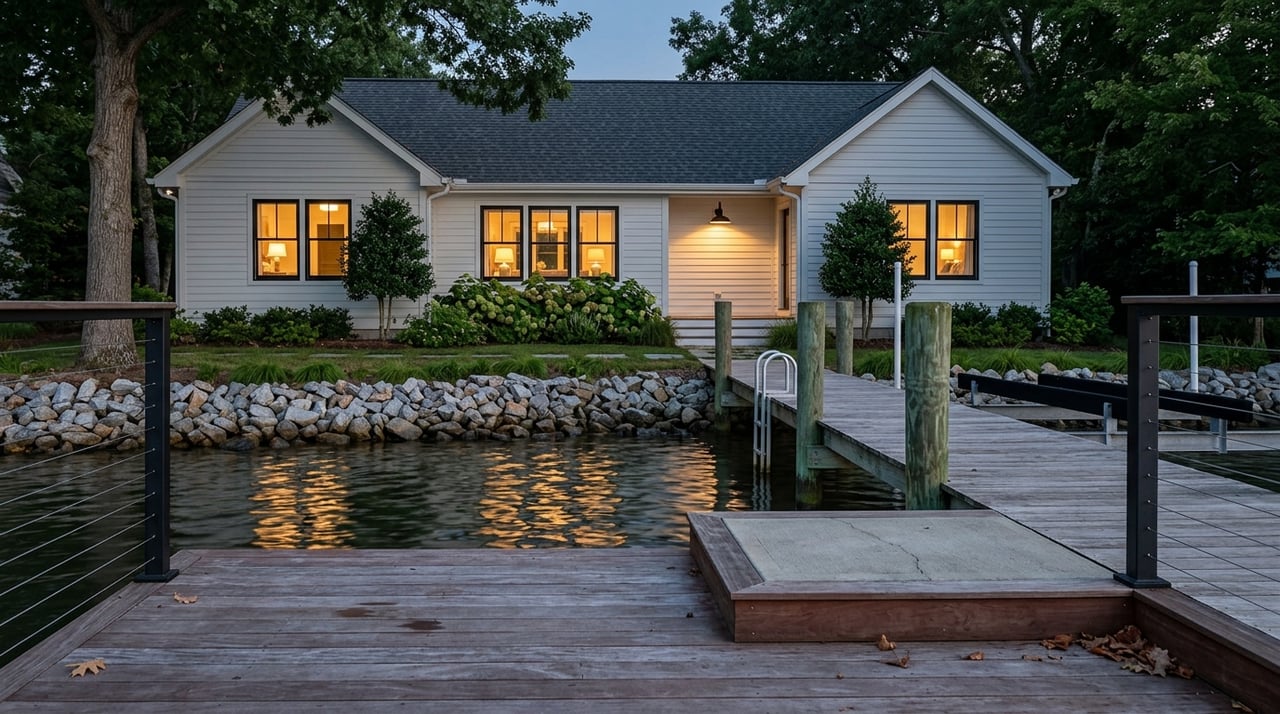
Shopping for waterfront property at Lake Anna can feel exciting right up until the details start stacking up. A dock that looks perfect in photos, a cove that seems boat-ready, or a shoreline lot that feels private can all come with rules, permits, and site conditions you need to verify before you close. If you want to buy with confidence, this guide will show you what to check first, what can affect future plans, and how to avoid expensive surprises. Let’s dive in.
Start With the Exact Waterfront Location
Not all Lake Anna waterfront property works the same way. According to Louisa County’s Lake Anna overview, the lake includes a public-access cold side and a private warm side, and the shoreline stretches across a large, varied waterfront area.
That matters because your experience depends on the specific parcel, not just the fact that it is “on Lake Anna.” Before you move forward, confirm which side of the lake the property is on, how much waterfront frontage it has, and whether it sits on the main lake or in a narrower cove.
Check Water Levels and Actual Depth
A common mistake is assuming a listing photo tells you everything you need to know about water access. Louisa County notes that Lake Anna is an impoundment owned by Dominion, and Dominion says the lake normally sits at 250 feet above mean sea level, with typical fluctuations of about 2 feet up or down and possible highs near 255 feet and lows near 242 feet.
In practical terms, water levels are not static. You should verify the water depth at normal pool, look at how usable the shoreline is for your goals, and make sure the dock area or shoreline access still works when the lake is not at a picture-perfect level.
Why cove width matters
Cove width can affect whether a dock layout is even possible. If you are buying for boating, swimming, or future dock improvements, a narrow cove may create design limits that do not show up in the listing description.
That is why it helps to evaluate the site itself, not just the marketing. A waterfront home can be attractive on paper and still be a poor fit if the depth or cove layout limits access.
Review Dock and Seawall Rules Early
If the property has a dock, needs a dock, or could need shoreline stabilization, permit review should happen early. Louisa County says a zoning permit is required for work that includes building a dock or seawall on Lake Anna, and the county also points property owners to Dominion’s guidelines and the Thomas Jefferson Soil and Water Conservation District for erosion and shoreline stabilization help.
This is one of the biggest due-diligence items for waterfront buyers. If you assume you can simply replace, expand, or add structures later, you could run into limits tied to the lot’s size, the cove shape, setback rules, or Dominion shoreline control.
Key dock limits to verify
Based on Dominion’s Lake Anna construction and use guidelines, buyers should check several site-specific details:
- Whether the structure sits within the property’s reserved and apportioned rights area
- Whether side extension property lines have already been established
- Whether piers, floating docks, and boat shelters meet the 15-foot side setback from the side extension line
- Whether the water access travel-way into a cove stays at least 30 feet wide until the cove narrows to 90 feet or less
- Whether a proposed structure would extend too far into a cove or the main lake
- Whether the lot has enough linear feet of shoreline for the type of structure you want
For some agricultural and residential parcels, Dominion says 0 to 54 linear feet of waterfront allows no slip or piers, while 55 to 99 linear feet is limited to 10 square feet per linear foot of shoreline. That makes frontage length far more important than many buyers realize.
Existing approvals may not carry over
Another detail buyers often miss is that shoreline paperwork may not transfer the way they expect. Dominion states that its agreement is revocable and non-transferable to a new owner, so you should verify whether existing approvals are current and what will be required after the sale.
If dredging may be needed, Dominion says the owner must contact Dominion first and then proceed through the Virginia DEQ joint permit application process, with dredging limited to October 1 through March 15. If a shallow lot is part of the appeal, that timing and approval path matter.
Confirm Navigable Water at Normal Pool
A dock is only as useful as the water around it. Louisa County’s shoreline packet says structures should generally extend only far enough to reach 5 feet of navigable water at normal pool, and reflectors are required on structures extending over Lake Anna.
That is another reason to look beyond photos. A site visit, permit file review, and depth check can help you understand whether the current setup matches county expectations and whether it fits how you plan to use the property.
Order Septic and Well Records Before Closing
Many Lake Anna properties rely on private systems, so septic due diligence is essential. The Blue Ridge Health District oversees onsite sewage systems and private wells in Louisa County, and septic records are available through the local health department.
Virginia Department of Health guidance says septic-related activity is not required as part of a sale, but the permit file can show the system components and design capacity. That means you should not wait for problems to surface later when the file may have raised questions from the start.
What septic records can reveal
According to VDH’s homebuyer guidance for onsite systems, buyers should review:
- The operation permit
- As-built drawings
- Maintenance reports
- Enforcement records
- Deed records for easements, waivers, conditional permits, and notices of recordation
VDH also recommends having the system inspected several weeks before closing because repairs can take time. If the property has a failing system or a repair waiver, you want to know that as early as possible, especially since some waivers may not transfer cleanly to a new owner.
Get a Survey and Verify Boundaries
Waterfront property lines are not always obvious on the ground. For Lake Anna shoreline lots, Louisa County’s lake structure guidance says a permit application needs a plat showing the location and dimensions of the project, and a foundation survey or setback certification may be required if a proposal appears to be within 20 feet of minimum setbacks.
A survey can help you understand where the lot lines actually run, where side extension lines may affect dock placement, and whether future plans are realistic. If any part of the project affects Dominion-owned property, the county says Dominion approval is also needed.
Check Flood Risk Before You Finalize Financing
Flood risk should be part of your early review, not a last-minute insurance call. Louisa County says it does not participate in the National Flood Insurance Program, though FEMA flood maps are still available online and private flood insurance is available.
That creates an important planning step for buyers on the Louisa County side of Lake Anna. You should discuss the property with your lender and insurance professional early so you understand whether flood coverage will be expected and what type of policy may be available.
Use FEMA maps carefully
FEMA says the Flood Map Service Center is the official source for flood hazard information, and it also notes that homeowners insurance usually does not cover flood damage. If a home is near the shoreline, do not assume your standard policy fills that gap.
Louisa County also says online flood maps are approximate. If the flood line looks questionable, the county notes that a surveyor can help determine floodplain boundaries more precisely, and FEMA explains the process for a formal flood-zone determination or Letter of Map Change.
Ask About Land Disturbance Plans
If you plan to clear trees, grade the lot, add retaining walls, install a driveway, or stabilize the shoreline, those improvements can trigger more than one approval. Louisa County says a land-disturbing permit is required at 10,000 square feet or more, while DEQ requires a stormwater construction general permit at 1 acre or more or for a common plan of development.
The county also notes that most single-family homes still need an Agreement in Lieu for shoreline residential development. In short, if your goal is to buy a property and “fix it up later,” make sure you understand what that work would require before you commit.
Follow a Smart Due-Diligence Sequence
When you are buying waterfront property at Lake Anna, the process goes more smoothly when you review the lot in the right order. A simple checklist can help you avoid chasing answers too late in the transaction.
Your Lake Anna waterfront checklist
- Confirm whether the parcel is on the public cold side or private warm side.
- Measure the lot’s waterfront frontage and review cove width.
- Check water depth and dock usability at normal pool.
- Review county shoreline rules and Dominion requirements for docks, seawalls, and other structures.
- Verify whether existing shoreline approvals are current.
- Order septic records and schedule a pre-closing inspection early if possible.
- Review survey, plat, setbacks, and any Dominion-related boundary issues.
- Check FEMA flood mapping and discuss private flood insurance with your lender and insurance provider.
- Confirm whether future grading, clearing, stabilization, or other improvements would trigger land-disturbance or stormwater approvals.
Work With Local Specialists
Lakefront purchases often need more coordination than a typical home purchase. Depending on the property, you may need input from a surveyor, a septic professional, a dock or shoreline contractor familiar with Louisa County and Dominion submissions, or an erosion and stabilization specialist.
That is where local guidance can save you time and reduce risk. When you have the right professionals involved early, it becomes much easier to separate a great waterfront opportunity from a property that may cost more to use or improve than you expected.
Buying at Lake Anna can be a fantastic move when the property matches your goals and the due diligence is handled carefully. If you want a clear, disciplined plan for evaluating waterfront homes, docks, septic questions, surveys, and the next steps before you write an offer, connect with Josh Harris for practical local guidance.
FAQs
What should you check first when buying waterfront property at Lake Anna?
- Start by confirming whether the property is on the public cold side or private warm side, then verify frontage length, cove width, and water depth at normal pool.
Do Lake Anna docks and seawalls require permits?
- Yes. Louisa County says zoning permits are required for work such as building a dock or seawall, and some projects also require Dominion review and approval.
Can an existing dock approval transfer to a new Lake Anna owner?
- Not automatically. Dominion says its construction and use agreement is revocable and non-transferable, so buyers should verify the current status of any shoreline approvals.
Why should you review septic records before buying a Lake Anna home?
- Septic records can show system design capacity, components, maintenance history, and any waivers or enforcement issues that could affect your use of the property.
Do you need flood insurance for a waterfront home in Louisa County at Lake Anna?
- It depends on the parcel, the lender, and available coverage, but Louisa County says it does not participate in the NFIP, so buyers should review FEMA maps and discuss private flood insurance early.
When should you order a survey for Lake Anna waterfront property?
- Early in the process, especially if you are evaluating dock placement, setback issues, floodplain questions, or any future shoreline improvements.