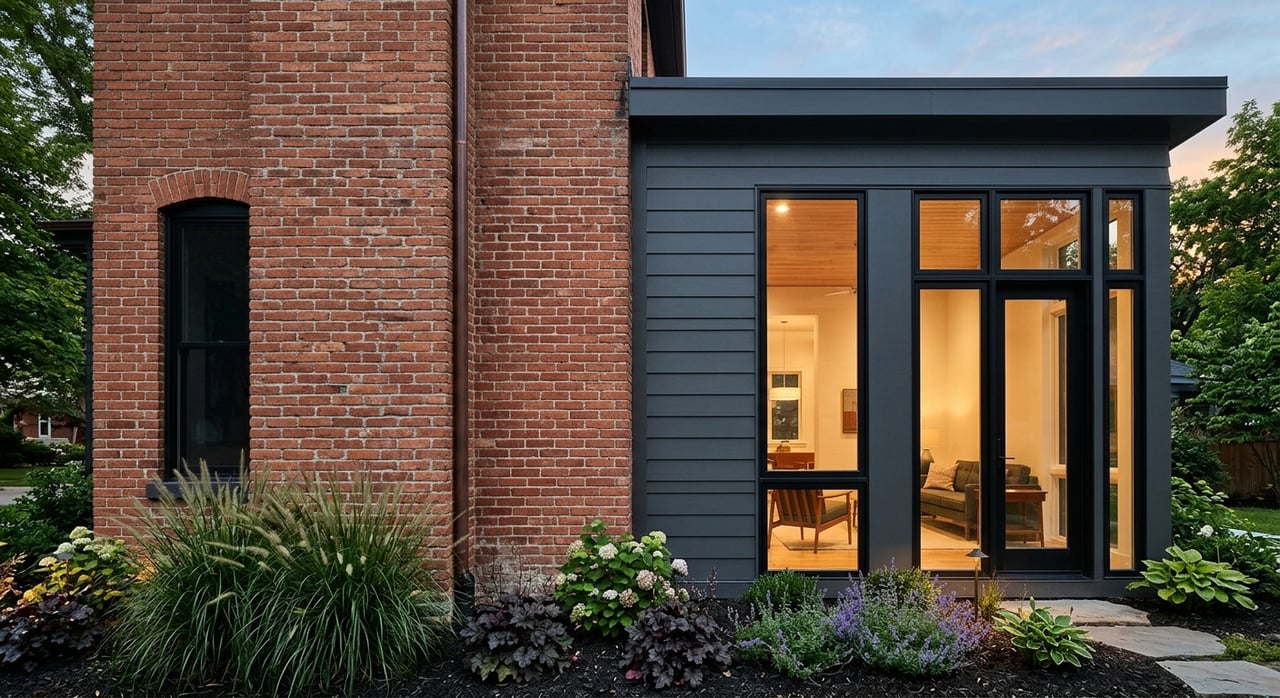
If you’re trying to decide between a brand-new home and an existing one in Charlottesville, you’re not alone. In this market, the choice is rarely as simple as “new is better” or “resale is cheaper.” What really matters is how each option fits your timing, risk tolerance, and day-to-day goals. Let’s break it down so you can make a smart, confident move.
Charlottesville market context
Charlottesville remains a fairly tight housing market. According to CAAR’s Q1 2026 report, the city had a median sold price of $477,500, median days on market of 19, 97 active listings, and 2.7 months of supply.
That matters because you are not choosing between new construction and resale in a slow, oversupplied market. In a supply-constrained setting like this, price, condition, timing, and location all carry real weight.
If you are also looking just outside the city, Albemarle County is part of the same broader local conversation. Q1 2026 data there showed a median sold price of $550,000, median days on market of 20, and 3.2 months of supply.
New construction basics
New construction can offer a more predictable path when you want a home with fewer unknowns at move-in. You are buying a property that must go through permits, inspections, and occupancy requirements before you can take possession.
In Charlottesville, new permits submitted after January 18, 2025 fall under the 2021 Virginia Statewide Building Code cycle. The city’s inspection process for new one- and two-family homes includes checks for footing excavation, foundation waterproofing and drainage, framing, rough-ins for mechanical, electrical, and plumbing systems, energy conservation, and final inspection.
Before a Certificate of Occupancy is issued, zoning inspections and an as-built survey are also required for new one- and two-family dwellings. In practical terms, that means a new home usually has a longer road to move-in than a resale home.
What new construction does well
New construction is often a strong fit if you want a more standardized process and a home that has not had years of wear and tear. It can also appeal to buyers who are comfortable waiting longer in exchange for a more predictable starting point.
Virginia law gives buyers of new dwellings some implied warranty protection. In general, the home must be built in a workmanlike manner and be free from structural defects, and if the vendor is in the business of building or selling these homes, the property must also be fit for habitation.
These protections generally last one year from transfer of title or possession, while the foundation warranty generally lasts five years. That does not eliminate risk, but it does give you some added protection against early defects.
What to watch with new construction
The biggest trade-off is usually timing. A home may look close to complete, but you still need to account for the permit process, staged inspections, and the final occupancy steps.
It is also important to understand that code inspections are not the same as a buyer-focused home inspection. Virginia Housing advises buyers to still hire a professional home inspector on newly constructed homes so you can catch issues before the final walk-through or closing.
Another point buyers sometimes miss is disclosure. In Virginia, the first sale of a dwelling is treated differently under the general disclosure rules, though a builder still must disclose in writing any known material defects that would violate applicable building code requirements.
Resale home basics
Resale homes give you access to properties that already exist, which often means a faster path to closing and occupancy. They can also open up more choices in established parts of Charlottesville where new build opportunities are limited.
That said, resale homes shift more of the decision into your inspection and due diligence process. In Virginia, the Residential Property Disclosure Statement is largely a buyer-beware notice.
The owner makes no representations or warranties about the property’s condition under that framework. Buyers are encouraged to conduct whatever due diligence they believe is necessary, including inspections, mold review, energy analysis, surveys, and zoning checks where relevant.
What resale does well
If you need to move on a shorter timeline, resale often has the advantage. The home is already built, and you are not waiting on construction milestones or final occupancy approval.
Resale can also offer more location flexibility. In Charlottesville, buyers looking for in-town areas, established streets, or homes with existing character often find more options in the resale market.
This matters in a city where inventory is limited and many desirable locations are already built out. If your top priority is a certain part of town, resale may give you a broader field to work from.
What to watch with resale
With resale, the home may be move-in ready on the surface, but the real questions often sit beneath that first impression. You may need to investigate zoning, flood exposure, historic district rules, lot lines, and wastewater systems depending on the property.
Charlottesville has eight Architectural Design Control districts and three Historic Conservation districts. Individually protected properties are subject to Board of Architectural Review oversight for exterior changes, including demolitions.
The city also notes that it has a flood hazard protection zoning district, with more than 270 city parcels in that area. About 7% of city parcels are within mapped flood zones, and the city also notes that some areas outside mapped flood zones still experience flooding.
Those location-based details can affect what you can do with the property later. So if you are buying resale in Charlottesville, due diligence is not just about the house itself. It is also about the parcel, the zoning, and the rules attached to the location.
New construction vs resale at a glance
The simplest way to frame the decision is this: new construction shifts more uncertainty into the build process, while resale shifts more uncertainty into inspection and due diligence.
New construction gives you staged municipal inspections and some warranty-backed protection. Resale gives you a physically existing home and often a faster move, but you carry more responsibility for evaluating condition and property-specific constraints.
| Factor | New Construction | Resale Home |
|---|---|---|
| Move-in timing | Usually slower due to permits, inspections, and occupancy requirements | Often faster because the home already exists |
| Condition | More predictable starting condition | Depends on age, upkeep, and inspection findings |
| Buyer protections | Implied warranties under Virginia law | Buyer-beware disclosure framework |
| Due diligence focus | Independent inspection still recommended | Inspection and property research are essential |
| Location options | Limited to current build opportunities | Often broader in established areas |
| Future restrictions to check | Standard zoning and permit issues | May include historic review, floodplain, zoning, or site-specific concerns |
Which option fits your situation?
The right answer usually comes down to the type of uncertainty you are more comfortable managing. Here are a few common Charlottesville buyer scenarios.
If you need to move quickly
Resale often makes more sense. Because the home already exists, you are usually closer to immediate occupancy than you would be with a home still moving through inspections and occupancy approval.
If you want fewer early-condition unknowns
New construction often has the edge. You still need your own inspection, but the combination of staged city inspections and Virginia’s implied warranty protections can make the early ownership period feel more predictable.
If location is your top priority
Resale may offer more flexibility. If you want an established in-town setting or a part of Charlottesville where little new inventory is being built, existing homes often provide more options.
If you want the most cautious due diligence path
Either option can work, but you need to approach each one correctly. New construction still benefits from an independent inspection, and resale absolutely requires a careful inspection and property-specific review.
How to make the decision wisely
In Charlottesville’s current market, it helps to avoid treating this as a simple new-versus-old debate. With only 2.7 months of supply in the city, good opportunities in either category can move quickly.
A better approach is to weigh four things together:
- Budget
- Move-in timeline
- Location priorities
- Comfort with condition and due diligence risk
When you look at the decision through that lens, the right choice becomes much clearer. You are not just picking a type of house. You are choosing the process and risk profile that best matches your goals.
If you want help comparing specific Charlottesville homes, build timelines, or due diligence factors, Josh Harris can help you sort through the options with clear advice and a disciplined plan.
FAQs
Is new construction better than resale in Charlottesville?
- Not automatically. In Charlottesville, the better choice usually depends on your timeline, location goals, and how much uncertainty you are comfortable managing during the process.
Do new construction homes in Charlottesville still need a home inspection?
- Yes. Virginia Housing advises buyers to hire a professional home inspector even on newly built homes because code inspections are not the same as a buyer-focused inspection.
Are resale homes in Charlottesville faster to move into?
- Often, yes. Because the home already exists, resale properties are usually closer to immediate occupancy than new homes still going through permits, inspections, and final approval.
What should Charlottesville resale buyers check beyond the house itself?
- Buyers should consider property-specific items such as zoning, lot lines, flood exposure, historic district rules, and any wastewater system issues where relevant.
Do new homes in Virginia come with warranty protection?
- In many cases, yes. Virginia law generally provides implied warranties for new dwellings, including a one-year general period and a five-year foundation warranty.
Is Charlottesville a competitive market for both new and resale homes?
- Yes. CAAR’s Q1 2026 data for Charlottesville show 19 median days on market and 2.7 months of supply, which points to a relatively tight market overall.